Monday, 29 June 2020

Monday, 8 July 2019
Some Interesting facts about Jagannath Rath Yatra Odisha
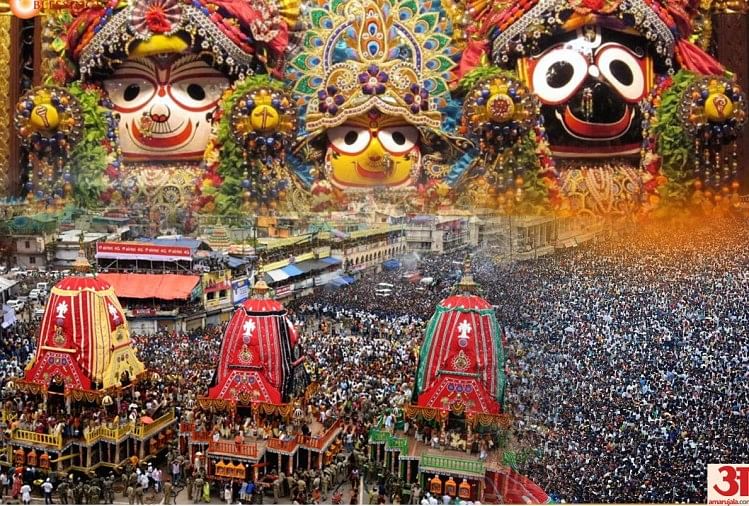
- As practiced in a few other orthodox Hindu temples, none other than Hindus will be allowed to enter the gates of the Jagannath temple in Puri to view the deities and offer worship. However, the entry is open to anyone irrespective of caste and religion during the Jagannath Rath Yatra. During this festival time, all people can worship the Lord and receive his blessings.
- The Rath yatra sees the procession of three independent chariots for the three deities of Jagannath, Balarama and Shubadra. Hence this event is also called the festival of chariots. The names of these three chariots are Nandighosha, Taladhwaja and Devadalana.
- Nandigosha is the chariot of Jagannath that is set on 18 wheels. Taladwaja, the chariot of Balarama runs on 16 wheels and 14 wheels roll the chariot Padmadhwaja in which Shubadra parades.
- The most astonishing facts about the Puri Jagannath Rath Yatra is that all the three chariots are constructed anew year after year prior to the festival. The construction makes use of newer materials as the years go by. However, the structure, model, design and measurements of the chariot remain the same. In front of each chariot, four wooden horses are fixed.
- The chariot tops replicate the structure of the temple towers built in the North Indian style. Hundreds of pilgrims and devotees pull the massive sized chariots with sturdy ropes. This creates an awe inspiring sight for the onlookers. For making the canopies of the chariots, about 1200 meters of cloth is used. A team of 15 skilled tailors make the canopies.
- As per the traditional belief, the king of Puri sweeps the floor with a broom stick before the chariots move forward thus providing a royal procession to the Lord with his accomplices.
- When the festival begins, Lord Jagannath seems to refuse moving out. Despite the efforts of the crowds, the chariot cannot be moved even an inch forward. After a few hours of mammoth efforts, finally the chariot moves forward to trigger the procession’s onward march.
- There is an interesting story behind the chariot festival. It is said Lord Jagannath catches high fever year on year prior to the Rath yatra. Hence he is given rest for a period of one week before the chariot festival. The temple doors remain shut for the public and none is allowed to disturb the resting Lord during this period. The chariot procession comes as a change for the Lord to visit his maternal aunt’s house after he recovers from his fever.
Sunday, 25 January 2015
SCIENCE-FICTION COME TO LIFE:MICROSOFT HOLOLENS
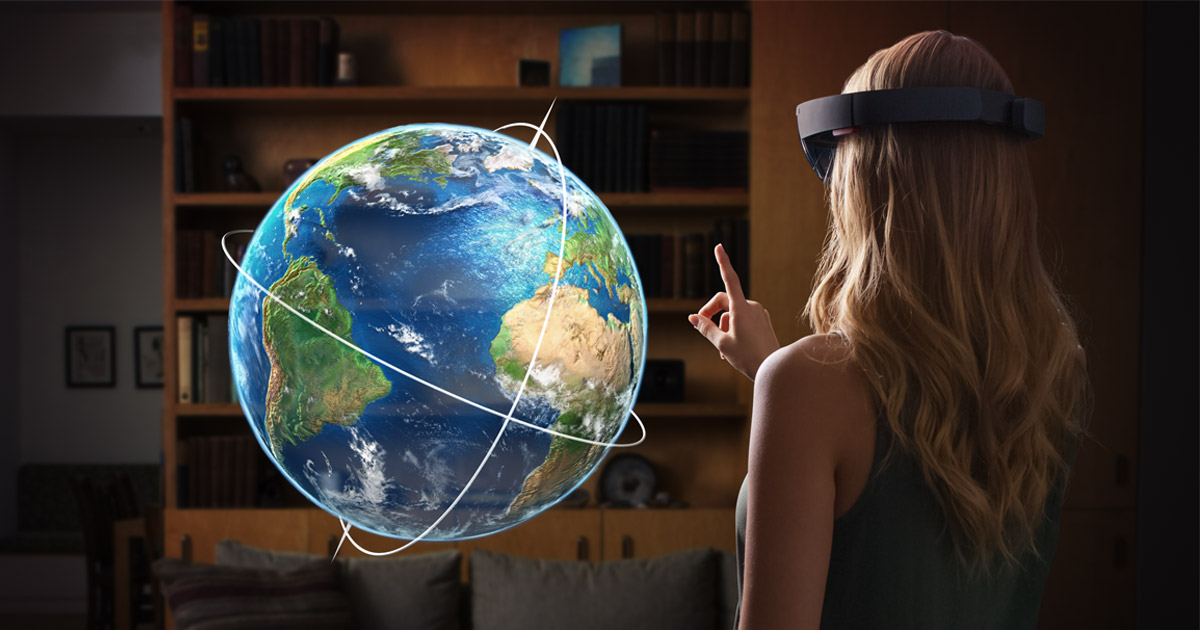
NO WIRES OR PC REQUIRED, IT'S A SELF-CONTAINED HOLOGRAM GENERATOR
Though still early in its development, HoloLens will be made available "in the Windows 10 timeframe" which could mean anything from 12 months to five years and, according to Microsoft CEO Satya Nadella, it will be priced "for both enterprise and consumers to use it." Microsoft has already shown HoloLens to at least one games publisher, with Take-Two Interactive CEO Strauss Zelnick describing the experience as "extraordinary."
Friday, 23 January 2015
Barack Obama's visit to India 2015

Friday, 2 January 2015
India blocks 32 websites, including Vimeo and Github
Monday, 13 October 2014
View of an Indian student towards America
Aniruddh Chaturvedi came from Mumbai to Carnegie Melon University in Pittsburgh, Penn., where he is majoring in computer science. This past summer he interned at a tech company in Silicon Valley.
During two years in the US, Chaturvedi has been surprised by various aspects of society, as he explained last year in a post on Quora.
Chaturvedi offered his latest thoughts on America in an email to Business Insider.
The most surprising things about America:
- Nobody talks about grades here.
- Everyone is highly private about their accomplishments and failures. Someone's performance in any field is their performance alone. This is different compared to India where people flaunt their riches and share their accomplishments with everybody else.
- The retail experience is nowhere near as fun/nice as it is in India. Because labor is cheap in India, there is always someone who will act as a "personal shopper" to assist you with holding your clothes, giving suggestions, etc. In America, on the other hand, even if you go to a Nordstrom or Bloomingdales, there is almost nobody to help you out while you're shopping. Shopping in America is more of a commodity/chore than it is a pleasurable activity
- This may be biased/wrong because I was an intern, but at least in the tech world, nobody wants to put you under the bus for something that you didn't do correctly or didn't understand how to do. People will sit with you patiently till you get it. If you aren't able to finish something within the stipulated deadline, a person on your team would graciously offer to take it off your plate.
- The same applies to school. Before I came to the United States, I heard stories about how students at Johns Hopkins were so competitive with each other that they used to tear important pages from books in the library just so other students didn't have access to it. In reality, I experienced the complete opposite. Students were highly collaborative, formed study groups, and studied/did assignments till everyone in the group "got it". I think the reason for this is that the classes are/material is so hard that it makes sense to work collaboratively to the point that students learn from each other.
- Strong ethics — everyone has a lot of integrity. If someone cannot submit their completed assignment in time, they will turn in the assignment incomplete rather than asking for answers at the last minute. People take pride in their hard work and usually do not cheat. This is different from students from India and China as well as back home in India, where everyone collaborates to the extent that it can be categorized as cheating.
- Rich people are thin/well maintained, poor people are fat. This stems from the fact that cheap food is fatty, rich people don't eat cheap food — they tend to eat either home-cooked food which is expensive or eat at expensive/healthy places. Unfortunately, it is expensive to be healthy in America.
- Fat people are not respected much in society. Being fat often has the same connotations as being irresponsible towards your body. If you're thin (and tall, but not as much), people will respect you a lot more and treat you better. You will also receive better customer service if you're well maintained. This extends my previous point which mentioned that if you're thin, you're statistically likely to be rich. Reason why I know this is that I went down from being 210lbs to 148-150lbs. The way people started treating me when I was thin was generally way better than the way I was treated when I was fat. As a small example, the Starbucks baristas were much nicer to me and made me drinks with more care/love.
- Girls are not very promiscuous, contrary to most Hollywood films
- Almost every single person in America has access to basic food, clothing, water and sanitation. I haven't been to states like Louisiana and cities like Detroit, but from what I can tell, nobody is scrambling for the basic necessities required for sustenance.
- Dearth of African Americans in technical fields. This probably stems from the fact that they aren't given enough opportunity, broken families, etc. I'm pretty sure you can extend upon this if you'd like.
- It's expensive to have brick houses in America, contrary to India where brick houses are the norm
- Emphasis on physical fitness/being outdoorsy — this is more of a California thing but I noticed families going on biking trips, boat trips, hiking, camping, barbecuing, etc. Americans take pride in the natural beauty of their surroundings and tend to make the most of it
- Americans waste a lot of food. It is very easy to buy in bulk because it's so much cheaper and as a result a lot of wastage occurs.
Obsession with coffee — Starbucks, Dunkin' etc is crowded with office-goers and students every morning. I don't understand why they can't drink or make coffee before leaving for work. Such a waste of money! ($5/day * 5days/week *52 weeks/year)!
- Split families, not having married parents, etc., is not seen differently than the contrary.
- Support towards the LGBT community — it's fairly normal to be part of the LGBT community; it's not considered a mortal sin if you like someone in your own gender or if you aren't comfortable being male/female/etc. Proof of this is the LGBT Pride Day held in every city etc.
- Smoking weed is seen the same as smoking cigarettes.
And, here are some more things he found surprising about America, excerpted from his post last summer on Quora :
The way that stores price their products makes no apparent economic sense, and is not linear at all.
For example, at a typical store:
- 1 can of coke : $1.00 - 12 cans of coke : $3.00 - 1 Haagen-Dazs ice cream bar : $3.00 - 12 Haagen-Dazs ice cream bars : $7.00
The return policy on almost everything: None of my friends back in India believed me when I told them that you can literally buy anything, including food, and return it within ninety days for a full refund even if you don't have a specific reason for doing so (most stores actually have a "Buyer's Remorse" category under Reason for Return options while returning the product).
The pervasiveness of fast food and the sheer variety of products available: The typical supermarket has at least a hundred varieties of frozen pizza, 50 brands of trail mix, etc. I was just astounded by the different kinds of products available even at small gas station convenience stores.
Soda being cheaper than bottled water: It makes no sense that carbonated and flavored water with HFCS are cheaper than regular water, but hey, that's just how it is.
The fact that there are full service rest stops with decent chain restaurants and big supermarkets every couple of miles on interstate highways
Fruit and vegetable prices, as compared to fast food prices:
- Bag of grapes : $6.00 - Box of strawberries : $5.00 - 1 lb tomatoes : $3.00 - McChicken : $1.00 - [McDouble] : $1.00
Unlimited soda refills:
The first time (and one of the last times...) I visited McDonalds in 2007, the cashier gave me an empty cup when I ordered soda. The concept of virtually unlimited soda refills was alien to me, and I thought there was a catch to it, but apparently not.
Slightly digressing, I've noticed that the typical fountain machine has a huge selection, including Pepsi, Pepsi Max, Sprite, Sprite Zero, Hi-C, Powerade, Lemonade, Raspberry Lemonade (and/or their coca-cola counterparts)... The list goes on. This may not seem like much, but it is actually a lot more compared to the 3-4 options (coca-cola, sprite, fanta, limca) that most Indian soda fountain machines have.
Serving Sizes: American serving sizes are HUGE! I've noticed that entree sizes are huge as well. I am by no means a small eater, but it usually takes me at least 1.5 meals to finish the entree.
US Flag displayed everywhere: I was surprised to see that the US flag is displayed in schools, on rooftops of houses, etc. India has very strict rules governing the display and use of the national flag. Also, something that struck out to me was how it was completely normal to wear the US flag or a US flag-like pattern as a bikini.
Over-commercialization of festivals: I'm not denying that festivals like Diwali and Eid aren't extremely commercialized in India, but America takes it to a whole new level. Black Friday, Cyber Monday, etc., and an almost year-round sale of Christmas, Halloween, Easter, etc. items.
An almost-classless society: I've noticed that most Americans roughly have the same standard of living. Everybody has access to ample food, everybody shops at the same supermarkets, malls, stores, etc. I've seen plumbers, construction workers and janitors driving their own sedans, which was quite difficult for me to digest at first since I came from a country where construction workers and plumbers lived hand to mouth.
Also, (almost) all sections of society are roughly equal. You'll see service professionals owning iPhones, etc. as well. This may be wrong but part of it has to do with the fact that obtaining credit in this country is extremely easy. Anybody can buy anything, for the most part, except for something like a Maserati, obviously. As a result, most monetary possessions aren't really status symbols. I believe that the only status symbol in America is your job, and possibly your educational qualifications.
Chaturvedi ended his post with a link to a video of "America F--- Yeah" from the movie "Team America."
Now we have a screen on the side of the mobile
Samsung Galaxy Note Edge has a screen on the side! The new smartphone has a small display that runs along the right edge of the body and can show items independent of the main display. For example, this strip can display time and date, stock quotes, messages and notifications etc. Samsung has even designed a game customized for this small display panel.
Friday, 26 September 2014
$749 iPhone 6 Plus Costs Apple Just $215.60 to Make: IHS
Apple's largest iPhone is selling for $100 more than its other new model, but an outside research firm estimated Tuesday that it costs Apple only $15.50 more to make the more expensive version.
Apple said it sold more than 10 million of the new iPhone 6 and iPhone 6 Plus models in their first three days on sale. Both have larger screens than earlier iPhone models, and analysts say consumers like the new, bigger sizes. The Plus has a 5.5-inch screen, as measured diagonally, while the regular iPhone 6 is at 4.7 inches
Apple will make more profit on the Plus version, according to a report from research firm IHS Technology. The full, no-contract price for the 16-gigabyte iPhone 6 is $649. IHS estimates it costs Apple $200.10 for materials and manufacturing. The iPhone 6 Plus retails for $749 without a contract, but IHS says it costs Apple $215.60.
With a two-year service contract with a wireless carrier, a 16-gigabyte iPhone 6 costs consumers $200. An iPhone 6 Plus costs $300 with a contract.
The Plus model also has a bigger battery and a slightly more expensive camera than the regular iPhone 6, according to IHS.
Apple didn't immediately respond to a request for comment on the report. The Cupertino, California, company usually doesn't disclose details of its manufacturing costs.
India's mars mission a big hit
NEW DELHI — India celebrated putting a spacecraft into orbit around Mars on Wednesday, hoping the rare feat will show the world it is open for business in space exploration and inspire a new generation of homegrown scientists to help drive growth.
Those motivations help explain why India, a poor country of 1.2 billion, even invests in a space program when so many of its people lack access to proper toilets, electricity and health care.
For one, boosting its space business has always been a key selling point of the country's program.
More than half of the world's missions to Mars so far have failed. In proving it can pull off a complex space mission, India becomes one of the world's few reliable ferrymen to the stars. That can attract investors, commercial launch orders and customers to hire Indian rockets and satellites for their scientific research.
But the program also is a source of pride and motivation for the country's burgeoning ranks of young professionals. India's robust scientific and technical education system has already produced millions of software programmers, engineers and doctors who have helped grow the country's growing middle class.
"Mars, of course, captures the imagination of the world. What better goal is there to reach for, to prove we can accomplish our goals?" said B.N. Raghunandan, the engineering dean at the Indian Institute of Science in Bangalore, India's tech hub.
Every time India launches another rocket, he said he is bombarded by students asking how they can get into the school's aerospace engineering program.
India's credibility also gets a huge boost, he said. "These kinds of successes put India in a better bargaining position, reassuring investors that we can perform."
India joined an elite club when it successfully guided its Mars Orbiter Mission, affectionately called MOM, into orbit around the red planet Wednesday morning. Only the U.S., former Soviet Union and European Space Agency have been able to do that before.
In scenes broadcast live on TV, scientists at the Indian Space and Research Organisation's command center in Bangalore erupted into cheers as orbiter's engines completed 24 minutes of burn time to maneuver the spacecraft into place. MOM had traveled some 666 million kilometers (414 million miles) and more than 300 days since breaking from Earth's gravitational pull.
India was particularly proud that MOM was developed with homegrown technology and for a bargain price of about $75 million — a cost that Modi quipped was lower than many Hollywood movie budgets. NASA's much larger Maven mission, whose satellite went into orbit around Mars on Sunday, cost nearly 10 times as much, at $671 million.
The country's business sector applauded the mission, with the Federation of Indian Chambers of Commerce and Industry saying "it will encourage Indian industry to invest in the research and innovation."
India's success shows the world that "they are now a force of capability ... that can be taken very seriously," said space expert Roger Franzen, the technical program manager at the Australian National University's Research School of Astronomy and Astrophysics.
"India has an extremely well-developed space industry that manufactures everything from the components to the spacecraft to the instrumentation to the launch vessels," he said.
In the realm of scientific space research, India also could soon join in collaborative missions with NASA or ESA, he suggested.
But the focus for the space agency, which operates on an annual budget of $1.1 billion, will remain on developing technologies for commercial and navigational satellite applications, the agency's chief K. Radhakrishnan said Tuesday. Those services could bring in significant revenues from companies or governments seeking to place their own satellites or research equipment in space.
"If we're going to earn money, we're going to do it on that," said D. Raghunandan of the Delhi Science Forum, a group that promotes the study of science. "India's portfolio is likely to be somewhat limited because we can't afford to spend that much money in pure science exploration and in an exercise of the imagination."
MOM will circle the planet for at least six months, with solar-powered instruments gathering scientific data that may shed light on Martian weather systems as well as what happened to the water that is believed to have existed once on Mars.
It also will search Mars for methane, a key chemical in life processes on Earth that could also come from geological processes. Experts hope data gathered will help them better understand how planets form and what conditions might make life possible.
"Mars is gradually unveiling its secrets to science and humanity and the Indian mission is yet another means of unveiling this enigma that Mars presents," said Franzen.
Even though India wrestles with many problems from poverty to hunger, that shouldn't stop the country from forging ahead in science and space, said B.N. Raghunandan, of the Indian Institute of Science.
"I don't think we can afford to lag behind. We can't sacrifice frontier research for the sake of solving old-world problems," he said. "These technological advances have their own spinoffs and benefits."
For 12-year-old Mansha Khanna, who was visiting the Nehru Planetarium in New Delhi for Mars-themed learning activities and games, the mission's success gave her something to dream about — becoming scientist
"I am proud to be born in a country that can do anything and succeed," he said.
Thursday, 25 September 2014

These frogs are true smartphones fan
Wednesday, 24 September 2014
Facebook settings you must change

India's cheapest smartphone at just Rs 1999 or $33
.jpg)
Bend: An Apple iPhone 6 story
Samsung going to launch a new smartphone in China before Apple
PM Narendra Modi Visit to US
Modi is scheduled to have breakfast in New York September 29 with CEOs including Google's Eric Schmidt and PepsiCo's Indra Nooyi, and meet six others including the heads of Boeing, IBM and Goldman Sachs.
Modi kicks off his maiden US visit on September 26, addressing the UN General Assembly on Saturday before attending a rally of Indian-Americans. He is due to fly on to Washington late September 29 to meet President Barack Obama.
"There will be a breakfast meeting with eleven major CEOs of various companies on Monday, the 29th of September. There would be the chairman of Google, there would PepsiCo and there would be several others," foreign ministry spokesman Syed Akbaruddin told a press conference in New Delhi.
"Following which (the) prime minister will have one-to-one meetings with six other individual CEOs, all of major US companies and investment institutions."
Modi's own breakfast will consist of no more than lemonade or tea — he is expected to restrict himself to a liquid diet during the trip to observe a nine-day Hindu religious fast.
Modi, known as a zealous moderniser when chief minister of the prosperous Gujarat state, is set to launch his pet 'Make in India' project at home a day before heading off to the US with an aim to boost the manufacturing sector.
Modi is expected to pitch the 'Make in India' project on the four-day trip to the US, encouraging global business leaders to set up shop in India, an initiative he announced in his Independence Day speech last month.
ISRO's Mars Orbiter Mission
Highest point on top of the bulge on Earth :Mount Chimborazo

- The winner of the hightest point of Earth is Mount Chimborazo in Ecuador. Mount Chimborazo, in the Andes, is a 20,000-plus-foot peak sitting on top of a bulge on the Earth. Mount Everest is a 29,000-plus-foot peak sitting lower down on that same bulge.
Tuesday, 23 September 2014
Mysterious Bermuda Triangle

- Located in the Atlantic Ocean, the Bermuda Triangle falls between Bermuda, Puerto Rico and Florida.
- The Bermuda Triangle has long been believed to be the site where a number of mysterious plane and boat incidents have occurred.
- While it has become part of popular culture to link the Bermuda Triangle to paranormal activity, most investigations indicate bad weather and human error are the more likely culprits.
- Research has suggested that many original reports of strange incidents in the Bermuda Triangle were exaggerated and that the actual number of incidents in the area is similar to that of other parts of the ocean.
- While its reputation may scare some people, the Bermuda Triangle is actually part of a regularly sailed shipping lane with cruise ships and other boats also frequently sailing through the area.
- Aircraft are also common in the Bermuda Triangle with both private and commercial planes commonly flying through the air space.
- Stories of unexplained disappearances in the Bermuda Triangle started to reach public awareness around 1950 and have been consistently reported since then.
- Unverified supernatural explanations for Bermuda Triangle incidents have included references to UFO’s and even the mythical lost continent of Atlantis.
- Other explanations have included magnetic anomalies, pirates, deliberate sinkings, hurricanes, gas deposits, rough weather, huge waves and human error.
- Some famous reported incidents involving the Bermuda Triangle include:
- The USS Cyclops and its crew of 309 that went missing after leaving Barbados in 1918.
- The TBM Avenger bombers that went missing in 1945 during a training flight over the Atlantic.
- A Douglas DC-3 aircraft containing 32 people that went missing in 1958, no trace of the aircraft was ever found.
- A yacht was found in 1955 that had survived three hurricanes but was missing all its crew.